Malaria and Other Vector-Borne Diseases Research Center
Message from the Director
Welcome to the Malaria and Other Vector-Borne Diseases Research Center (MVBDRC). The establishment of the center at Hawassa University comes at a pivotal moment in Ethiopia’s public health journey. While a significant strides in reducing the malaria burden has made, emerging challenges—including vector behavioral and insecticide resistance, parasite drug and diagnostic resistance, climate change, the expanding geographic range of invasive vector species, and the persistence of neglected tropical diseases—require us to establish a platform where multifaceted factors can be approached in an innovative and localized context.
Our goal is not just to study diseases, but to translate our laboratory and field findings into life-saving policies. We are committed to fostering an environment where rigorous science meets community service. We invite researchers, students, and global partners to join us as we work toward a future free from the burden of vector-borne illnesses."
Dawit Hawaria Logita, PhD , Director, MVBDRC
Contact Information
We welcome inquiries regarding research collaborations, training programs, and community outreach.
Email: dawit.hawaria@hu.edu.et
Tel: (+251)-916-044383
Background
The Malaria and Other Vector-Borne Diseases Research Center (MVBDRC) is established at Hawassa University in June 2025. The center was founded to spearhead high-impact research and specialized training focused on malaria, other vector-borne infections, and neglected tropical diseases (NTDs). By deepening our understanding of disease ecology and epidemiology within the local context, MVBDRC aims to bridge the gap between scientific discovery and the implementation of practical prevention and control strategies.
Vision
To be a leading center of excellence in East Africa for research and training in malaria, other vector-borne infections, and neglected tropical diseases.
Mission
To advance global health by conducting high-quality, interdisciplinary research, providing specialized training, and fostering innovation. The center is committed to supporting the implementation of programs that effectively control and prevent vector-borne diseases through collaborative partnerships and evidence-based solutions.
Strategic Pillars
To achieve our mission, the center focuses on five key strategic areas:
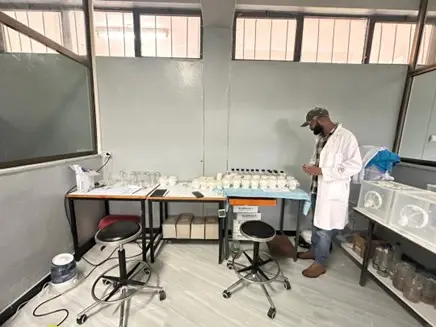
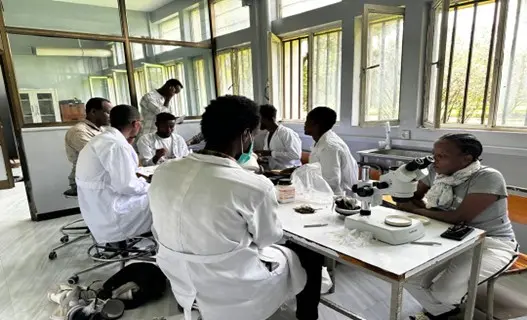
- Research & Innovation: Advancing scientific knowledge through cutting-edge laboratory and field studies.
- Capacity Building: Providing advanced training for the next generation of researchers and health professionals.
- Community Service: Implementing health interventions that directly benefit the local community.
- Evidence-Based Policy Support: Translating research findings into actionable public health strategies.
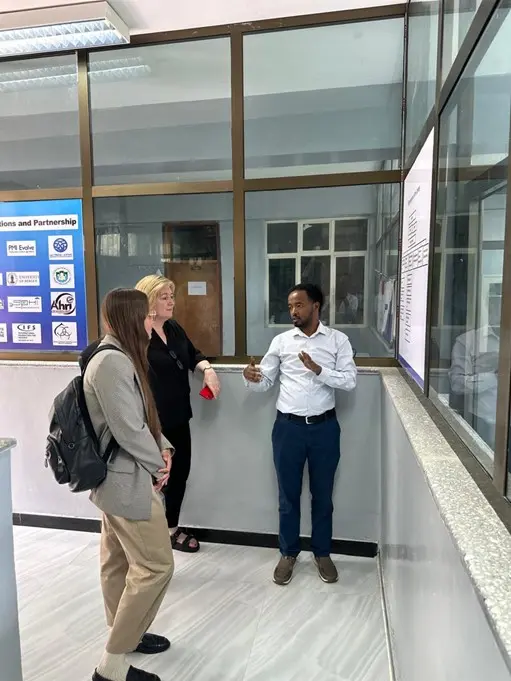
- Strategic Collaboration: Building local and international partnerships to tackle complex health challenges.
Core Values
The MVBDRC is governed by a commitment to rigorous research ethics, academic integrity, and social responsibility. So as to contributes to Hawassa University’s overarching vision of becoming a leading institution in Africa known for research excellence, technology transfer, and transformative community service.
News & Announcements
Grand Opening of MVBDRC (June 2025)
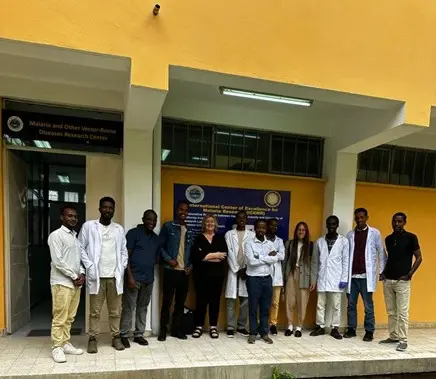
We are proud to announce the official establishment of the Malaria and Other Vector-Borne Diseases Research Center at Hawassa University. This milestone marks a significant step forward in the University’s commitment in eliminating malaria and other vector borne diseases through localized, high-impact research.
Join Our Mission: Call for Collaborations
The MVBDRC is committed to the belief that complex health challenges require collective action. We invite academic institutions, research institutions, NGOs, governmental health agencies, donors, and private sector innovators to partner with us in:
- Joint Research Projects: Investigating disease epidemiology, vector ecology, climate change impacts on transmission, and genomic surveillance.
- Grant Partnerships: Co-authoring proposals for global health funding.
- Student Exchange & Training: Hosting Postgraduate students and post-doctoral fellows for field and lab-based research.
- Technology Transfer: Implementing new diagnostic tools and vector control technologies.